Archive for December, 2009
Rios de lava
Tuesday, December 15th, 2009BOOK DESCRIPTION
This rich anthology offers 128 pages of magnificent poetry for the upper elementary, middle and high school students. The works of some of the most prestigious poets in the Spanish speaking world are represented.
Some of the poets included among many others are:
- from Spain, Rafael Alberti, León Felipe, Gloria Fuertes, Federico García Lorca, Juan Ramón Jiménez, Antonio Machado, Lope de Vega
- from Argentina, Fryda Schultz de Mantovani, Pedro Juan Vignale, María Elena Walsh
- from Costa Rica, Rodolfo Dada, Carlos Luis Sáenz
- from Chile, Gabriela Mistral, Pablo Neruda, Nicanor Parra, Violeta Parra
- from Cuba, Mirta Aguirre, David Chericián, Nicolás Guillén, José Martí
- from México, Antonio Ramírez Granados, Octavio Paz, Totoquihuatzín
- from Nicaragua, Rubén Darío
- from Perú, Javier Sologuren
- from Uruguay, Juana de Ibarborou
Poems published originally in this anthology, by F. Isabel Campoy include: “Abre la mano”, “Mi voz”, “Los colores de la tarde” and “En el museo”, and from Alma Flor Ada “Arco iris”, “Bosques”, “Campesinos y campesinas migrantes”, “Guijarros”, “El mismo sol”, and “El Inca Garcilaso de la Vega”.
AUTHOR’S NOTE
Poetry is one of the best gifts we can give children. A poem a day enhances a child’s life with the sounds of words, with rhyme and rhythm, with the enchantment of images and metaphors, with the invitation to see reality with new eyes.
Our culture is very rich in outstanding poets and excellent poetry. Some poets write primarily for children, but even our most recognized poets have at some time or other written poetry that children can enjoy.
The Cielo abierto Poetry Collection is composed of seven poetry anthologies. These rich anthologies include selections from the folklore along with the work of the best Spanish-speaking poets from the United States, Latin America and Spain. Each of the selections has been carefully chosen to awaken children’s love of poetry and to deepen their appreciation for the musicality and richness of the Spanish language. Original poems by Alma Flor Ada and Isabel Campoy are also included.
It is impossible to assign a specific age to poetry, since the same poem can be enjoyed by children of different ages at different moments. Yet, there is a certain progression of language and reading difficulty in the series reflected in the order in which the titles are listed.
Grade levels have been mentioned next to the titles as an orientation, but should not be seen restrictively.
The titles are:
- Gorrión, gorrión [PreK-2] 64 pages
- El verde limón [K-3] 48 pages
- Dulce es la sal [K-3] 48 pages
- La rama azul [2-5] 64 pages
- Nuevo día [2-5] 64 pages
- Huertos de coral [5-8] 128 pages
- Ríos de lava [5-12] 128 pages
READERS’ RESPONSES
If you have enjoyed reading or sharing this book, I would very much like to hear from you. Please click here to send your comments.
¿Quién cuida al cocodrilo?
Tuesday, December 15th, 2009BOOK DESCRIPTION
Who will take home the classroom’s pet alligator while school is out for a week? The surprises that lie in store are not what the teacher had anticipated. This fun book can lead to interesting reflections on the relationships between children and adults, as well as the importance of listening.
AUTHOR’S NOTE
It doesn’t surprise me that children enjoy this book so much. Behind the simple story I’m sure they recognize how adults, many times, do not truly pay attention to children. And thus they enjoy that the protagonist was able to take the crocodile so uneventfully to Aunt Henrietta’s house.
READERS’ RESPONSES
If you have enjoyed reading or sharing this book, I would very much like to hear from you. Please click here to send your comments.
¡Pío Peep! Traditional Spanish Nursery Rhymes
Tuesday, December 15th, 2009Bilingual Anthology of Folklore for Young Children
RECOGNITIONS
Notable Book in the area of Language Arts by National Book Council
Best Ten Books for Babies, Beginning with Books, Center for Early Literacy
Best Book of the Year, Nick Jr. Magazine
Media Award, Parent’s Guide to Children’s Media
100 Titles for Reading and Sharing, New York Public Library
Books of the Year Award, Parenting Magazines
2 x 2 Reading List, Texas Library Association
Starred Review, School Library Journal
Starred Review, Críticas
Miami Herald Best Books of the Year
BOOK DESCRIPTION
El sol es de oro
la luna es de plata
y las estrellitas
son de hoja de lata.
The sun’s a gold medallion
The moon’s a silver ball.
The little stars are only tin;
I love them best of all.
Here is a groundbreaking bilingual collection of traditional rhymes that celebrates childhood and Spanish and Latin American heritage. From playing dress up to making tortillas, and from rising at daybreak to falling asleep, these joyful rhymes are sure to delight young readers.
Passed down from generation to generation, the twenty-nine rhymes included have been lovingly selected by distinguished authors Alma Flor Ada and F. Isabel Campoy. English adaptations by Alice Schertle capture the spirit of each rhyme and have a charm all their own. Accompanied by enchanting illustrations by Spanish artist Viví Escrivá, this collection is destined to become a beloved classic for children already familiar with the rhymes as well as those encountering them for the first time.
AUTHOR’S NOTE
The treasuries of the folklore, whether rhymes, riddles, songs or tongue twisters were precious gifts in my childhood. In gratitude for the joy they gave me I have tried to share them in multiple forms, within poetry anthologies, like Días y días de poesía, Gorrión gorrión, and in books, like Mama Goose, MooMuu, Merry Navidad and many others. I have written about my childhood experiences with these folk traditions in the book Pin Pin Sarabín. I hope you find as much joy sharing this book as I had during its compilation.
REVIEWS
School Library Journal
Pre-School–Grade 2: Following in the tradition of Margot Griego’s Tortillitas para Mama (Holt, 1995) and Jose-Luis Orozco’s Diez deditos (Dutton, 1997) comes this stellar collection of nursery rhymes. Selected from the rich oral tradition of Latin America and the American Southwest, most of the verses are known throughout the Spanish-speaking world. The rhymes cover everything from early morning birds to elephants to angels, and the reason for their enduring popularity is clear. Deeply rhythmic verses, compelling rhyme schemes, and words that “play trippingly on the tongue” characterize every verse. Schertle’s excellent English adaptations are not literal translations but poetic re-creations. They retain the rhythm, meter, and general meaning of the originals, making the rhymes as memorable and memorizable in English as they are in Spanish. Escriv ‘s watercolor and colored-pencil illustrations use brilliant hues and detail to reconstruct a young child’s world. Certain to become a staple for preschool and early elementary programs, this offering is also a wonderful, reassuring lap book. A must-purchase for libraries. © 2003 Reed Business Information, Inc.
Booklist
PreSchool: As the preface to this delightful book states, nursery rhymes and songs are an important part of Spanish oral folklore. The 29 rhymes here–some accompanied by finger plays or games, and some simply meant to be chanted on their own–in most cases came to the Americas from Spain. They are presented both in Spanish and in English, although “to preserve the charm of the original rhymes,” the English versions are not translations but “poetic recreations.” Even adult readers with a rudimentary knowledge of Spanish will see some of the differences, but both versions have a sweet, rhythmic simplicity that will get children singing, clapping, and perhaps making some forays into a new language. The watercolor illustrations, featured prominently on the page, are a mix of historical and contemporary, generic Latin American scenes, and pictures of animals (not Escriva’s artistic strong suit). Parents, teachers, and librarians will find a multitude of uses. –Ilene Cooper.
Grandma’s Book Letter
GRANDMA RECOMMENDS… FOR BABIES AND TODDLERS:
¡Pío Peep! Traditional Spanish Nursery Rhymes, selected by Alma Flor Ada and F. Isabel Campoy.
The authors tell us that Spanish oral folklore is rich in nursery rhymes and songs, some are fragments of ancient medieval ballads while others are old harvest songs. Ada and Campoy have gathered some of the best known and most loved rhymes in this lively bilingual edition.
…
Give the gift of another culture to wee ones this season with a bilingual bedtime reading of “Pio Peep: Traditional Spanish Nursery Rhymes.” Vivi Escriva catches the eye with bright watercolors while Alice Schertle preserves the sing-song sound as the 29 rhymes move from Spanish to English. The result of one translation is, “Rice Pudding / rice pudding / it’s married I’ll be / I’ll find in the city / the right girl for me.” — Linda Piwowarczyk
Great Kids Books
I really enjoy sharing poetry and stories from other cultures with young children. Here is a wonderful collection of traditional Spanish nursery rhymes and songs, in both Spanish and English. It’s perfect for toddlers and young children, but would also be great to explore with slightly older children who are leaning Spanish… More »
READERS’ RESPONSES
If you have enjoyed reading or sharing this book, I would very much like to hear from you. Please click here to send your comments.
One, Two, Three… Who Can It Be?
Tuesday, December 15th, 2009BOOK DESCRIPTION
With this predictable book children will delight in guessing the name of well loved characters: Little Red Riding Hood, Baby Bear, Ratoncito Pérez or Pérez de Mouse, the first Little Goat, the Big Bad Wolf, Mother Rabbit and the Three Little Pigs.
Each of the characters offers a brief first person description of himself, or herself, and later adds details which the children may not be familiar with, to enrich the description.
ON THE LANGUAGE BOOKS OF GATEWAYS TO THE SUN SERIES
The four books in the Language series of Gateways to the Sun or Puertas al Sol are fractured fairy-tales which will help to develop children’s language in very specific areas:
By predicting who are the characters, and then reading their first person descriptions in: One, Two, Three. Who Can It Be? or Uno, dos, tres. ¡Dime, quién es children will become acquainted with personal descriptions and familiarize with language that will help them talk about themselves.
A New Home for the Seven Little Kids or El nuevo hogar de los siete cabritos shows all the elements of a house. Children will be able to understand a plan for the rooms of a house and will find the vocabulary related to furniture and appliances.
In Happy Birthday, Little Red Riding Hood or ¡Feliz cumpleaños, Caperucita Roja! children will follow Little Red Riding Hood and her mother as they plan a birthday party. Creating the list of guests, writing the invitations, looking for addresses in an address book, writing the envelopes, making a shopping list, and following some simple recipes all will contribute to see the many ways in which language is present in daily life.
AUTHOR’S NOTE
Reintroducing well loved characters from fairy tales has always been an enjoyable form to create a book. After the success of the Hidden Forest series, Dear Peter Rabbit or Querido Pedrín, Yours truly, Goldilocks or Atentamente, Ricitos de Oro, With Love, Little Red Hen and the recent Extra! Extra! Fairy Tales News from Hidden Forest or ¡Extra! ¡Extra! Noticias del Bosque Escondido to continue to play with fairy tales characters seemed just a natural thing to do.
CONNECTIONS
Besides the connections between the four books of this series of Gateways to the Sun, there are multiple connections to these characters in other titles. Little Red Riding Hood, Baby Bear, the Three Little Pigs and the Big Bad Wolf are all present in the Hidden Forest Books Dear Peter Rabbit or Querido Pedrín, Yours truly, Goldilocks or Atentamente, Ricitos de Oro, With Love, Little Red Hen and the recent Extra! Extra! Fairy Tales News from Hidden Forest or ¡Extra! ¡Extra! Noticias del Bosque Escondido.
Spanish-speaking children would enjoy listening to Caperucita Roja’s story in the CD Cuéntame un cuento, where Suni Paz has created music for Alma Flor Ada’s recreation of the story in verse format.
Mother Rabbit or Mamá Coneja is the main character of the original story A Surprise for Mother Rabbit or La sorpresa de Mamá Coneja from the series Stories the Year ‘Round or Cuentos para todo el año.
The story of The Three Little Pigs or Los tres cerditos has been also retold in verse format and put to music by Suni Paz. It can be read in the book Cuéntame un cuento or listened to in the CD by the same name.
The complete traditional tale of Ratoncito Pérez or Pérez the Mouse can be found as “Martina Martínez and Pérez, the Mouse” or “Martina Martínez y el ratoncito Pérez” in Tales Our Abuelitas Told or Cuentos que contaban nuestras abuelas.
A delightful song “La Cucarachita Martina” offers a brief version of the encounter between Martina and Pérez. It can be found in Sigue la música, number 7 of the collection Música amiga.
A different take on the story is presented in The great-granddaughter of Cucarachita Martina o La tataranieta de Cucarachita Martina which brings the story to present times.
READERS’ RESPONSES
If you have enjoyed reading or sharing this book, I would very much like to hear from you. Please click here to send your comments.
Olmo and the Blue Butterfly
Tuesday, December 15th, 2009BOOK DESCRIPTION
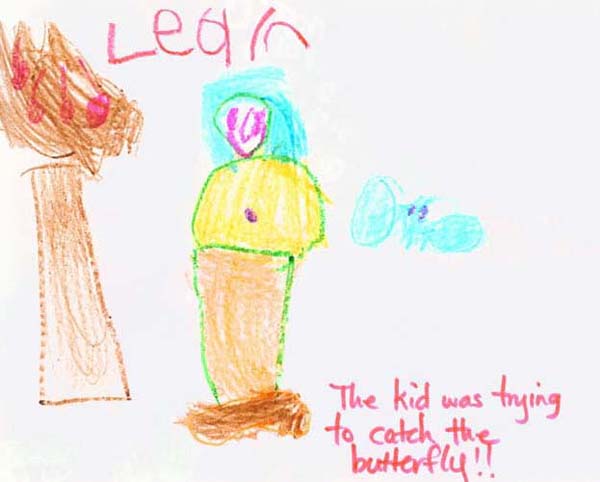
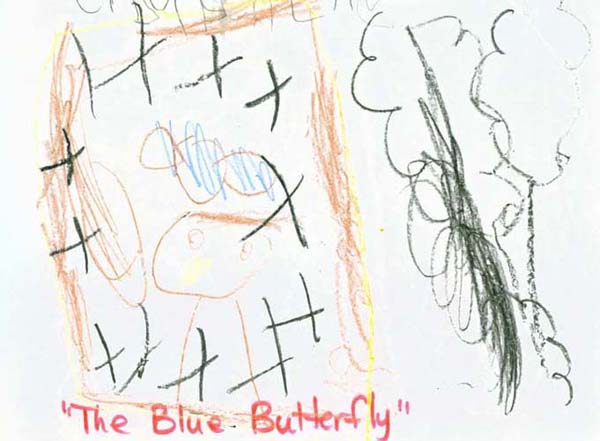
Olmo, a young boy, pursues a blue butterfly throughout the pages of this oversized picture book, handsomely illustrated by Viví Escrivá. The young reader will delight in identifying Olmo in different vehicles as he voyages through the San Francisco landscape. While this book serves as a beautiful introduction to the theme of transportation, Olmo’s journey is also about the pursuit of dreams, and the discovery that what we search for is already within us. Minimal text makes it a book for all ages.
AUTHOR’S NOTE
Children are always fascinated when they find out that Olmo is a real boy. The book was inspired by Olmo, the oldest grandson of Viví Escrivá, whose feet hardly ever remained on the ground. In turn, Viví was inspired by her first visit to San Francisco to create the radiant illustrations which have charmed children and adults. My own dream, expressed in this book, is that we can all acknowledge that the origin of all beauty, and all possible joy, is hidden in the depth of our own souls.
READERS’ RESPONSES


If you have enjoyed reading or sharing this book, I would very much like to hear from you. Please click here to send your comments.
Nuevo día
Tuesday, December 15th, 2009BOOK DESCRIPTION
This ample collection of poetry, with 96 pages, lively illustrated, with poems from the most important poets of the Spanish speaking world including poetry by Rafael Alberti, Elsa Isabel Brnemann, Jaime Ferrán, Ester Feliciano Mendoza, Isabel Freire de Matos, Ernesto Galarza, Antonio Granados, Nicolás Guillén, Juan Ramón Jiménez, Gabriela Mistral, Carlos Murciano, Marina Romero, Alfonsina Storni, María Elena Walsh. Among the selections from the folklore there are four versions of the tradicional Romance de don Gato. It also includes original poems by F. Isabel Campoy as Todas las familias del mundo, La voz del verano and Si un día tuviera… and original poems by Alma Flor Ada among others Mar, Querer, and Diego Velázquez.
AUTHOR’S NOTE
Poetry is one of the best gifts we can give children. A poem a day enhances a child’s life with the sounds of words, with rhyme and rhythm, with the enchantment of images and metaphors, with the invitation to see reality with new eyes.
Our culture is very rich in outstanding poets and excellent poetry. Some poets write primarily for children, but even our most recognized poets have at some time or other written poetry that children can enjoy.
The Cielo abierto Poetry Collection is composed of seven poetry anthologies. These rich anthologies include selections from the folklore along with the work of the best Spanish-speaking poets from the United States, Latin America and Spain. Each of the selections has been carefully chosen to awaken children’s love of poetry and to deepen their appreciation for the musicality and richness of the Spanish language. Original poems by Alma Flor Ada and Isabel Campoy are also included.
It is impossible to assign a specific age to poetry, since the same poem can be enjoyed by children of different ages at different moments. Yet, there is a certain progression of language and reading difficulty in the series reflected in the order in which the titles are listed.
Grade levels have been mentioned next to the titles as an orientation, but should not be seen restrictively.
The titles are:
- Gorrión, gorrión [PreK-2] 64 pages
- El verde limón [K-3] 48 pages
- Dulce es la sal [K-3] 48 pages
- La rama azul [2-5] 64 pages
- Nuevo día [2-5] 64 pages
- Huertos de coral [5-8] 128 pages
- Ríos de lava [5-12] 128 pages
READERS’ RESPONSES
If you have enjoyed reading or sharing this book, I would very much like to hear from you. Please click here to send your comments.
Mediopollito / Half-chicken
Tuesday, December 15th, 2009A Latin American Folktale in a Bilingual Edition
RECOGNITIONS
Aesop Award Accolade – American Folklore Association
Pick of the Lists – American Booksellers Association
Americas Commended List
BOOK DESCRIPTION
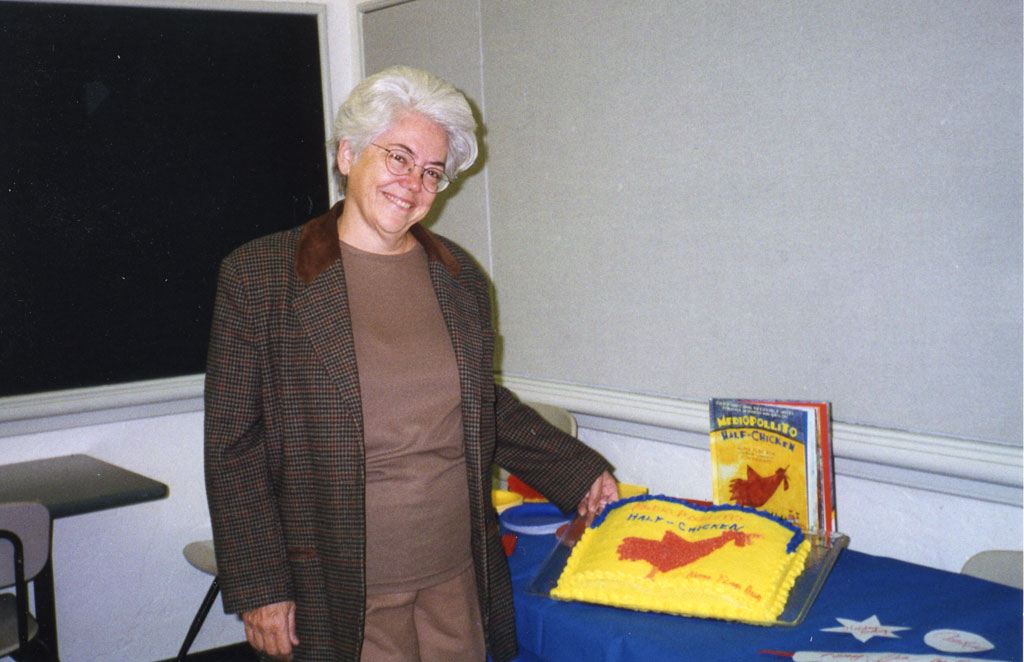
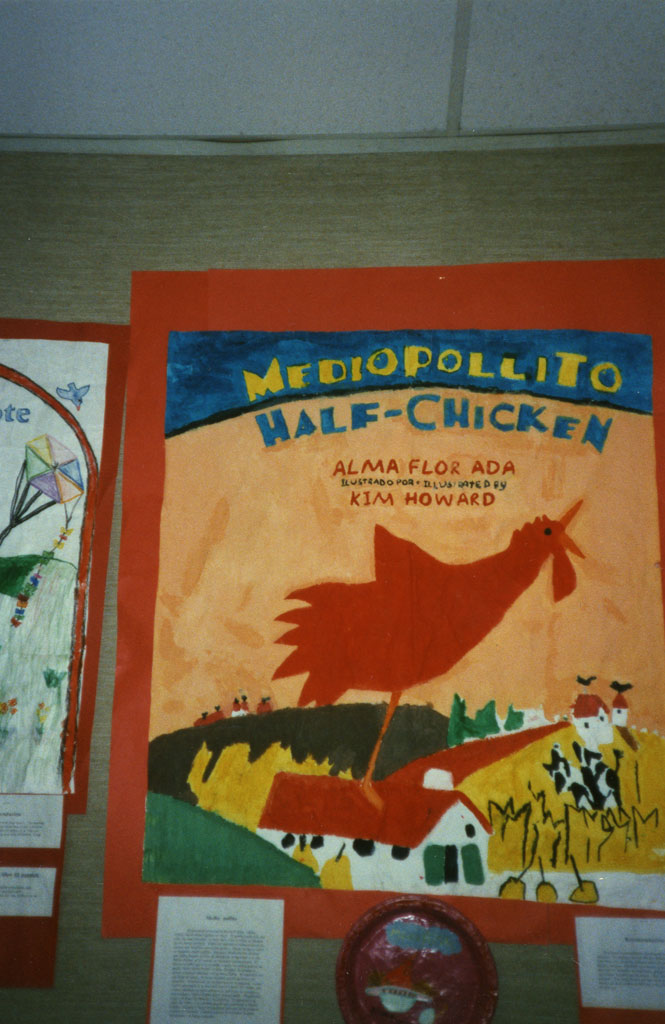
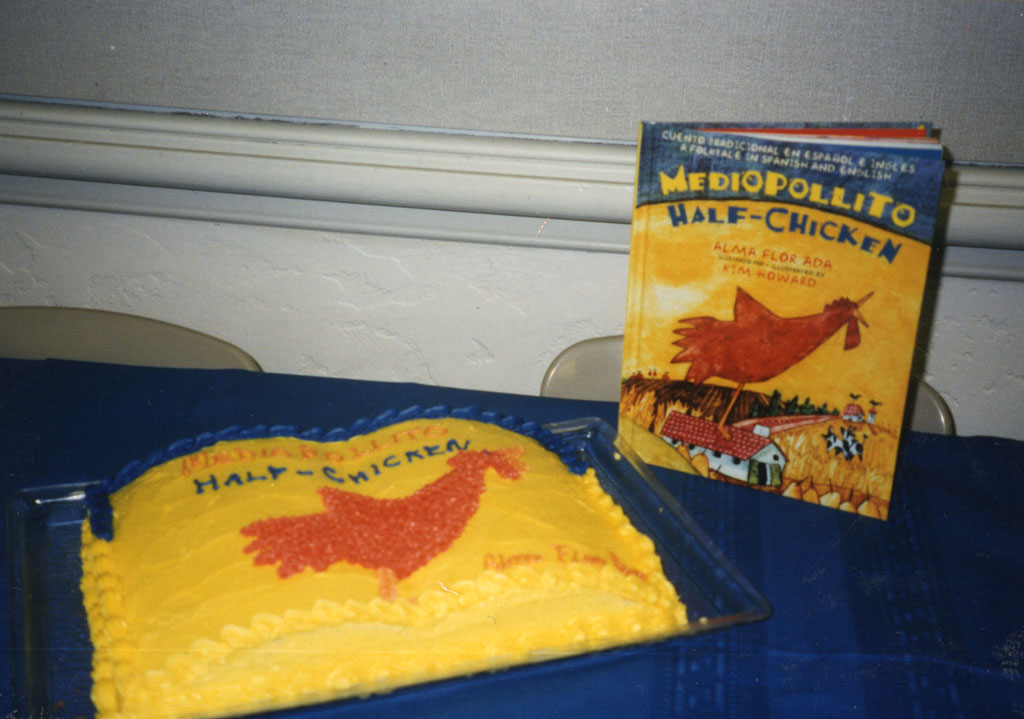
Have you ever seen a weather vane? Do you know why there is a little rooster on the top, spinning around to tell us which way the wind is blowing? Here is the answer in this old, old story about a very special chicken. With only one eye, one leg, and one wing, Half-Chicken sets off to see the world. His adventures take him far and wide, until at last he’s carried straight to the top in this lively, humorous retelling, in Spanish and English, of a traditional folktale. This traditional Hispanic folktale was set in colonial Mexico, to provide children with a glimpse of that period of Mexican history.
AUTHOR’S NOTE
As a young child I loved listening to my grandmother tell this story. Later this tale became a favorite for my children. Whenever I go, I look for weather vanes, since Half-chicken supposedly was the first weather vane. I enjoy seeing how many different shapes people have thought for this friendly artifact to tell the direction of the wind. One of my dreams is someday to travel around the world taking pictures of all the different weather vanes.
On retelling this story which my grandmother loved to tell, I chose her version, of collaboration, as opposed to other versions in which Half-chicken refuses to help when requested to do so, and ends up being punished, instead of helped. I know how much it meat to me as a child that Half-chicken misadventures would have a satisfying ending.
The welcoming received by the book and the joy of the hundreds of children to whom I have told the story add constantly to my unending gratitude towards my grandmother.
REVIEWS
School Library Journal
Pre-School–Grade 2: An adaptation of a Spanish folktale that explains the origin of weather vanes. The hatching of a chick with only one wing, one leg, one eye, and half the usual number of feathers raises quite a stir on a colonial Mexican ranch. All of the attention encourages the vain Mediopollito, Half-Chicken (as he is called), to seek his fortune. He encounters, in turn, fire, water, and wind and assists each of them during the course of his trip “to Mexico City to see the court of the viceroy!” In return, the elements come to the fowl’s aid and Half-Chicken finds his rightful place in the scheme of things. The repetitive and predictable nature of the tale makes it an appropriate read-aloud choice. The translation retains the meaning and flavor of the original Spanish, which appears alongside the English on each double-page spread. The folksy and brightly colored illustrations, “inspired by the patterns and texture of Mexican murals,” provide lively and interesting visual information. While the characters are at times a bit caricatured, this title remains a good addition to folklore collections. –Graciela Italiano, Weber State University, Ogden, UT
Booklist
Ages 4-8: Hip hop hip hop, Half-Chicken is off to Mexico City to see the court of the viceroy. Along the way, he helps the stream, the fire, and the wind, and they, in turn, help Half-Chicken when the viceroy’s cook tries to turn him into chicken soup. Finally, the wind blows Half-Chicken to safety atop a palace tower. “And from that day on, weathercocks have stood on their only leg, seeing everything that happens below, and pointing whichever way their friend the wind blows.” Ada gives her riotous retelling of this traditional folktale about the vain but helpful Half-Chicken a flavorful colonial Mexican setting. Howard matches the frolicsome mood and Hispanic setting with exuberant and glowing illustrations inspired by the patterns and textures of Mexican murals. Presented in a bilingual format and brimming with silliness and the simple repetition that children savor, this picture book is a jewel that will add a spicy sparkle to any folktale collection. –Annie Ayres.
The Horn Book
Noted translator and writer Ada has set her bilingual retelling of this traditional tale from Spain in colonial Mexico. As the humorous rather off-beat story opens, a mother hen hatches a chick with “only one wing, one leg, only one eye, and only half as many feathers as the other chicks.” Half-Chicken, as he comes to be known, gets a swelled (half) head from all the attention he attracts and decides to travel to Mexico City to show his uniqueness to the viceroy. Off he hops, stopping on his urgent quest only to unblock a stream impeded by branches, fan a small fire that is about to go out, and untangle a wind caught up in some bushes.”
“Half-Chicken finally reaches the viceroy palace, but instead of the hero’s welcome he expects, the little rooster is greeted with jeers and ignominiously thrown into a kettle on the kitchen fire. The good deeds Half-Chicken performed on his journey, however, literally get him out of hot water: the grateful fire tells the water to jump on him and put him out, and the water complies. Then, tossed out of the window by the frustrated cook, Half-Chicken is again rescued, this time by the wind, who blows him to the top of a tower. There, transformed into a weather-vane, he is forever safe from cooking pots. Ada’s liberal use of repetition, especially in describing Half-Chicken’s gait –“hip hop hip hop” –and the convention of the three helpers keep this rather unusual story grounded, with Howard’s vibrant, jaunty illustrations, rich in warm reds and golds and lively with pattern and texture, move the story forward with great energy. Her humorous depiction of poor scrawny Half-Chicken is particularly successful. ” (M.V.P., The Horn Book. November/December 1995)
Pick of the Lists
“A traditional Spanish folktale set in Mexico stretching the tale of a vain half-chicken who becomes a weather vane. Written in both Spanish and English (with full text in both languages), it is a welcome addition to the bilingual shelf. It is also a wonderful tale, painting the humor and delight of Mexico for those who cannot read or speak Spanish.” (“Pick of the Lists”, American Bookseller Magazine. August 1995)
Library Talk
“Alma Flor Ada’s Medio Pollito/Half-Chicken spins a Latin-American version of a Spanish tale explaining why weather vanes stand on one leg. English is one side of the double pages. Spanish on the other. A chick is born with only one wing and leg: a half chicken. He decides he is important enough to go to the viceroy’s court in Mexico City. On the way he helps some water, fire, and wind. When he ends up in a cooking pot in the viceroy’s palace, the elements help him escape to a rooftop, where he remains. Repeated themes will read well aloud. Kim Howard’s mixed-media double-page scenes present stylized details, often having the look of batik on cloth.” (Library Talk. May/June, 19996)
UC Davis School of Education
Summary: Alma Flor Ada retells a folktale in Spanish and English. The folktale is about how the weather vane originated. It is all told through the main character, Mediopollito, who is not an ordinary chick.
Recommendation for Parents: One of the most obvious benefits to this book is the fact that it is bilingual. Children should be exposed to different languages. The illustraitions are colorful and vivid. The book also has a very important message: it is ok to be different because we all have something to offer… More » – UC Davis School of Education, Read Aloud Recommendations
Americas Commended List
This well-done bilingual folktale explains why the weather vane has a little rooster on one end that spins around to show which way the wind is blowing. In contrast to the Ugly Duckling, here the unique and unlike-others chicken becomes vain from all the attention! Readers will find themselves exploring the unusual and brilliant illustrations.
Dozens of links to lesson plans, activities, and worksheets for all books in the series.
http://www.loveland.k12.oh.us/district/ technology/itech/les/reading/h.htm
http://urbanext.illinois.edu/eggs/res33-suggested.html
http://greatkidbooks.blogspot.com
READERS’ RESPONSES
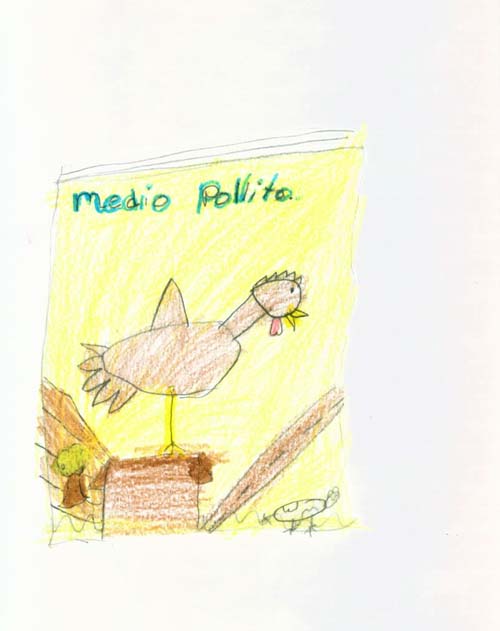
Welcome Readers! Click to hear an interactive presentation by Mrs. Yencho’s 3rd Grade Rockin Readers! Enjoy!
If you have enjoyed reading or sharing this book, I would very much like to hear from you. Please click here to send your comments.
Mamá Goose: A Latino Nursery Treasury
Tuesday, December 15th, 2009Bilingual Anthology of Folklore for Young Children
BOOK DESCRIPTION
Alma Flor Ada and Isabel Campoy, acclaimed authors and scholars of Latino literature, have spent years culling popular and beloved lullabies, jump-rope songs, riddles, proverbs, and more from all over the Spanish-speaking world. The result is the most comprehensive bilingual folklore collection available in this country. Full of charm and humor, rich with the diversity of Latino cultures, this one-of-a-kind treasury is the perfect introduction to Latino folklore for English speakers, and a trove of familiar favorites for Spanish speakers.
AUTHOR’S NOTE
The treasuries of the folklore, whether rhymes, riddles, songs or tongue twisters were precious gifts in my childhood. In gratitude for the joy they gave me I have tried to share them in multiple forms, within poetry anthologies and in books, like ¡Pío Peep!, MuuMoo, Merry Navidad, Ten Little Puppies/Diez perritos and many others.
I have written about the wonderful moments these folk traditions brought to my childhood in the book Pin Pin Sarabín. I hope you find as much joy sharing this book as I had during its compilation.
REVIEWS
School Library Journal
Pre-School–Grade 2: This lovely compendium includes lullabies, finger games, lap games, sayings, nursery rhymes, jump-rope songs, proverbs, riddles, tall tales, a ballad, birthday songs, and Christmas carols. The format is spacious, with lots of room for both the Spanish and English text and clear, charming watercolor cartoon illustrations that vary from spreads to small insets. The selections, which are just as much fun to read in English as in Spanish, are wonderful examples of paraphrasing. While not literal translations, the general sense of the rhymes is maintained in cadence and rhyme. This is a perfect example of translation as an art form and of the fact that license sometimes trumps literalness. A perfect companion volume to the authors’ ¡Pío Peep! (HarperCollins, 2003).
Booklist
Pre-School–Gr. 2: This packed-to-the-gills volume features nursery rhymes, riddles, sayings, and songs drawn from the rich traditions of Spanish-speaking cultures. Arranged in thoughtfully introduced sections such as “Canciones de comba / Jump-Rope Songs” and “Adivinanzas / Riddles,” the 68 selections appear first in Spanish, followed by a loose recasting of the original in italicized English. Tracey Heffernan is credited with “creative editing of the English,” a role that extends beyond strict translation to produce English entries that preserve features such as rhyme, onomatopoeia, and repetition. The results occasionally stray significantly from the originals’ sense, so readers hoping to enrich a developing second language won’t be particularly well served; others will wish for musical notation and annotations about each entry’s cultural origins. (Jose-Luis Orozco’s bilingual poetry collections include more of both.) Still, native Spanish speakers wanting to share favorite rhymes with children will relish this book’s breadth–and young speakers of either language will appreciate the bouncing rhythms and nonsense fun. Two indexes, one in Spanish and one in English, conclude, and lighthearted watercolors by Suarez appear throughout. Jennifer Mattson
READERS’ RESPONSES
If you have enjoyed reading or sharing this book, I would very much like to hear from you. Please click here to send your comments.
