Archive for December, 2009
Let Me Help! /¡Quiero ayudar!
Tuesday, December 15th, 2009BOOK DESCRIPTION
Perico, the parrot, learns to say “Let Me Help!” from little Martita, who’s been saying that a lot lately. When the whole family scrambles to prepare for Cinco de Mayo, Perico knows there must be some way he can help—even if he is just a parrot.
Perico tries to help make delicious tamales. He tries to help craft beautiful paper flowers for the barge his family will take down the San Antonio River. He tries to help the boys practice their mariachi number on the porch. But at every turn Perico is shooed away, until he finally figures out how he can add something special to the Cinco de Mayo fun.
This is the story of every young reader who has been told he or she is too little or too young to help. Angela Domínguez’s vibrantly hued paintings glow with the rich colors of the southwest. Let Me Help! is a joyful read-aloud even the littlest helpers can celebrate year around.
AUTHOR’S NOTE
The inspiration for this book comes from several sources that one day combined to give birth to the story.
Parrots were very common pets on my home island of Cuba. My great grandmother always had a parrot perched on a large iron ring in her kitchen. I especially remember a cotorra which she called Cotita. When we moved to the city, the next door neighbors had a parrot, a perico, which would frequently call my father’s name at the most unsuspecting times. He would cry Modesto!!! in a voice that sounded so human it constantly fooled my father into believing some one was calling him. Needless to say he found that parrot most annoying!
I have always loved the city of San Antonio from my very first visit, and have always rejoiced when conferences and in-services gave me the opportunity to visit it.
This book is in a way a homage to San Antonio and to the state of Texas where I have always been most welcome. I have done numerous presentations in Texas, I have taught summer courses both at the University of St. Thomas in Houston and at UT in El Paso, and while I have never resided in Texas I have spent many days of my life in the Lone Star state.
Finally, as a mother of four children and grandmother of nine, I am very much aware of how important it is for little children to be given the opportunity to help.
CONNECTIONS
Celebrations are part of every culture. Families celebrate birthdays and weddings, and society celebrates historical dates and accomplished people. In recognition of the importance of celebrations, Isabel Campoy and I have written the twelve books of the series Stories to Celebrate or Cuentos para celebrar.
Some fiestas develop greater meaning over time. For example, Cinco de Mayo commemorates the Battle of Puebla, when on May 5, 1861, the Mexican army defeated the French, who had invaded Mexico. Today, in the United States, Cinco de Mayo celebrates the contributions of all Latinos to life in our society. Several pieces of my work relate to Cinco de Mayo. One of them is the book Celebrate Cinco de Mayo with a Mexican Hat Dance or Celebra el Cinco de mayo con un Jarabe Tapatío. This book, as all others in the Celebrate Series is divided in two sections: a fictional narrative and a non-fiction explanation of the celebration.
The story uses the idea of the poem, “Jarabe tapatío” included in Corre al Coro, number 4 of the collection Música amiga. The poem, has been turned into a song by Suni Paz, and appears in the CD of the same name. The Cinco de Mayo celebration is also the setting for the book The Empty Piñata or La piñata vacía from the series Stories the Year ‘Round or Cuentos para todo el año.
Book Reviews
Críticas / School Library Journal
Gr 2-5: After escaping from his cage, Perico, a parrot, sees his family preparing for a Cinco de Mayo celebration and wants to be part of the excitement. He volunteers to help make tamales, reciting a line he learned from little Martita: “Let me help! Let me help!” His offers are repeatedly brushed away by family members as they make paper flowers and pan dulce and practice their trumpets. Discouraged, Perico follows the family’s barge and watches as its topmost decoration hits a bridge and falls into the San Antonio River. At that moment, he perches atop the barge and saves the day as only he can. The vibrant and festive colors used throughout invite readers into the celebration, and the images are true to the people they portray. The bilingual text is fluid in both Spanish and English, and the subject is sure to spark interest in the holiday. With this story, Ada reminds children that good intentions are the best help that anyone can offer.–Roberto Zapata, San Antonio Public Library, TX
Los bloguitos / La bloga
Perico learns this phrase from little Martita, who’s been saying it a lot lately. When the whole family scrambles to prepare for Cinco de Mayo, Perico knows there must be some way he can help—even if he is just a parrot.
Perico tries to help make delicious tamales. He tries to help craft beautiful paper flowers for the barge his family will take down the San Antonio River. He tries to help the boys practice their mariachi number on the porch. But at every turn Perico is shooed away, until he finally figures out how he can add something to the Cinco de Mayo fun.
Acclaimed author Alma Flor Ada’s tale is the story of every young reader who has been told he or she is too little or too young to help. Angela Domínguez’s vibrantly hued paintings glow with the rich colors of the southwest. Let Me Help! is a joyful read-aloud, yay!
Alma Flor Ada is an award-winning children’s book author, a gifted translator, and one of the leaders in the field of bilingual education in the United States. Born in Cuba, Alma Flor received her PhD at the Pontifical Catholic University of Lima, Perú, did her post-doctoral research at Harvard University as a Fellow of the Radcliffe Institute, and is a Fulbright Research Scholar. She was named Professor Emerita at the University of San Francisco in 2004. She lives in Northern California’s Marin County.
Angela Domínguez was born in Mexico City and raised in Texas. Growing up, she loved to read and to draw. In 2007, she received her MFA in illustration from the Academy of Art in San Francisco. When she is not drawing, she enjoys the outdoors and drinking coffee. She hopes that her illustrations make people of all ages smile. This is her first picture book, and second children’s book. She lives in Fresno, California.
Look out for Let Me Help! in April. It’ll be out just in time to help you plan your Cinco de Mayo festivities. — http://labloga.blogspot.com/2010/01/quiero-ayudar-let-me-help.html
An INterview with the Illustrator
READERS’ RESPONSES
If you have enjoyed reading or sharing this book, I would very much like to hear from you. Please click here to send your comments.
La rama azul
Tuesday, December 15th, 2009BOOK DESCRIPTION
The poetry selection of this anthology has been complemented with lively illustrations from four gifted artists.
The anthology includes original poetry by Alma Flor Ada and Francisca Isabel Campoy as well as poems from a number of poets from Latin America and Spain, including such renown poets as Juan Ramón Jiménez, Salvador de Madariaga, and Lope de Vega, from Spain; José Martí, Nicolás Guillén, Mirta Aguirre, and Dora Alonso, from Cuba; Pablo Neruda, from Chile; Javier Sloguren, from Perú; Floria Jiménez, from Costa Rica; Carlos Murciano from Spain, Ernesto Galarza, from México and California; Elsa Isabel Bornemann and José Sebastián Tallón, from Argentina. Among the poets included are: Julia Calzadilla, Marta Giménez Pastor, Elsa Lira Gaiero, Josemilio Gonzalez Díaz, Cesáreo Rosa,
AUTHOR’S NOTE
Poetry is one of the best gifts we can give children. A poem a day enhances a child’s life with the sounds of words, with rhyme and rhythm, with the enchantment of images and metaphors, with the invitation to see reality with new eyes.
Our culture is very rich in outstanding poets and excellent poetry. Some poets write primarily for children, but even our most recognized poets have at some time or other written poetry that children can enjoy.
The Cielo abierto Poetry Collection is composed of seven poetry anthologies. These rich anthologies include selections from the folklore along with the work of the best Spanish-speaking poets from the United States, Latin America and Spain. Each of the selections has been carefully chosen to awaken children’s love of poetry and to deepen their appreciation for the musicality and richness of the Spanish language. Original poems by Alma Flor Ada and Isabel Campoy are also included.
It is impossible to assign a specific age to poetry, since the same poem can be enjoyed by children of different ages at different moments. Yet, there is a certain progression of language and reading difficulty in the series reflected in the order in which the titles are listed.
Grade levels have been mentioned next to the titles as an orientation, but should not be seen restrictively.
The titles are:
- Gorrión, gorrión [PreK-2] 64 pages
- El verde limón [K-3] 48 pages
- Dulce es la sal [K-3] 48 pages
- La rama azul [2-5] 64 pages
- Nuevo día [2-5] 64 pages
- Huertos de coral [5-8] 128 pages
- Ríos de lava [5-12] 128 pages
READERS’ RESPONSES
If you have enjoyed reading or sharing this book, I would very much like to hear from you. Please click here to send your comments.
Jordi’s Star
Tuesday, December 15th, 2009RECOGNITION
Children’s Books of the Year 1997
Booklist starred review
BOOK DESCRIPTION
Jordi lives a solitary life on a barren and rocky hillside. One day, after a terrible thunderstorm, he finds a most unusual friend, a star reflected on a pond by his house. Inspired by his love for this unexpected friend, he sets about finding ways to enhance the pond and its surroundings. Before he knows it all of the mountainside has changed… Magically illustrated by Susan Gaber this story has proven to be inspiring to children of all ages.
CD DESCRIPTION
This CD contains the reading of three of my favorite stories: Jordi’s Star, The Malachite Palace, and The Unicorn of the West. It was a very meaningful experience for me to record these books, to choose the music to accompany the reading, and to share after each recording the story of the creation of each book.
AUTHOR’S NOTE
This book was inspired by a landscape where two different mountains, one green, one dry faced each other. In reality it is the sum of my beliefs: beauty is all around us, if only we pause to see it. And love is the strongest energy. As we love we are transformed, as we love the world can be transformed. I chose the name Jordi for the character in recognition of a beautiful tradition. In Catalonia, to celebrate Saint Jordi’s feast day, April 23, friends greet each other with a rose and a book.
The best accolade that I could have been received for this book was granted me a very short time ago when a mother brought his son, Jordi, and asked me to autograph a book for him. She said she had heard the name only once before, but when she saw it in this book she chose it for her son. I hope he will always be a lover of roses and of books and a good friend to many!
REVIEWS
Publishers Weekly
Gaber’s (Bit by Bit) radiant, clear-toned paintings give a quiet luminescence to this story of a solitary shepherd who lives with his flock among dry and dusty hills. One day, after a heavy rain, Jordi finds a small pond has formed near his house. Bereft of human companionship, Jordi befriends a star that is reflected in the water each night. To please it, he plants flowers and fruit trees, and these actions bring him into touch with the blossoming mountainside and with his neighbors in the nearby village. Ada (My Name Is Maria Isabel) uses matter-of-fact language to take the strangeness out of Jordi’s imaginary relationship; he does not ask the star about the nature of the cosmos-he asks her if she slept well and chats to her about the beauty of the foliage. The hero’s plump, bearded face, almost blank at first, gains rosy good cheer as the story progresses. The gently humorous illustrations make the tale of Jordi’s spiritual growth shine with joy. Ages 4-8.
School Library Journal
Pre-School–Grade 3: A solitary shepherd finds a special kind of magic. On a hillside stripped bare by woodcutters, Jordi tends his goats. Hoping to save a trip to the river, he digs a hole in the ground, but the would-be well remains dry. An intense rainstorm fills the hole, creating a pool that mirrors the night sky. Gazing at its reflection, Jordi truly believes that a star has fallen into the pool. Overcome with happiness, he attempts to make his new friend comfortable, gradually bringing rocks, flowers, and other gifts from nature. As the years pass, the now-lush hillside flourishes and both Jordi and his star shine with contentment. Written with strong emotion and a sense of wonder, this story has the tone and resonance of a folktale. Because Jordi is presented with dignity and simple wisdom, his belief in the star does not seem foolish, but rather an act of faith powerful enough to change his life. Done with acrylics on coquille board, Gaber’s paintings are pleasing. Jordi is the only splash of color against a barren background; his bearded, square-jawed face is painted with deep emotion as, touched by starlight, he smiles in his sleep, or gazes lovingly into the pool. Landscape scenes are varied with close-up pictures, and changes in the perspective add detail and depth to the illustrations. A moving, beautifully told story. –Joy Fleishhacker, School Library Journal
Booklist
Ages 4-8: Jordi lives a difficult, lonely life on a rocky hill, tending a herd of goats. The terrain is bleak, and even getting water is difficult. When the hole he digs to try to open a well fills with water during a thunderstorm, Jordi’s life is forever altered. That night he sees a star shining in the pool, and he gazes on it enraptured. He is certain the star has gone to sleep when it disappears from the pool the next day, and sure enough, that night the star reappears. Feeling an urge to nurture his new friend, he begins bringing it things–large rocks, which he puts together with soft moss; shiny quartz pebbles, which he tosses into the bottom of the pool; and “some tiny blue flowers he had never noticed before.” Day by day, he brings more gifts to the star, gradually transforming his landscape and himself: “Jordi could not understand how life had once seemed so sad and lonely to him, filled as it was with so many beautiful things to discover.” This touching, lyrically told story is given substance by Gaber’s earthy illustrations, which show Jordi as a poignantly real man, his broad face and large hands in sharp contrast to the delicate flowers and the twinkling star. The book is appropriate for any picture-book collection, but one particular illustration, which shows Jordi sleeping as starlight shining in the window illuminates a cross and an icon, makes this an especially fine choice for church and parochial school libraries. –Susan Dove Lempke.
The Reading Teacher
“[…] Acrylic paintings drawn on coquille board by Susan Gaber convey the story’s beautiful spirit. Alex, age 11, reflected: ‘We can see how something so small could bring a man so much joy’.” (The Reading Teacher. October, 1997)
READERS’ RESPONSES
If you have enjoyed reading or sharing this book, I would very much like to hear from you. Please click here to send your comments.
It Wasn’t Me
Tuesday, December 15th, 2009BOOK DESCRIPTION
In this Valentine’s Day story, a young child shows his love for his mother. The very easy text makes the book suitable for early readers and second language learners.
One of the beloved titles of the series Stories the Year ‘Round, or in Spanish, Cuentos para todo el año. The complete stories of the series are:
SPRING
A Rose with Wings
A Surprise for Mother Rabbit
The Empty Piñata
PRIMAVERA
Rosa alada
La sorpresa de Mamá Coneja
La piñata vacía
SUMMER
How the Rainbow Came to Be
After the Storm
In the Cow’s Backyard
VERANO
Cómo nació el arco iris
Después de la tormenta
La hamaca de la vaca
FALL
The Kite
What Are Ghosts Afraid Of?
“Turkey for Thanksgiving?” “No, Thanks!”
OTOÑO
El papalote
El susto de los fantasmas
–¿Pavo para la Cena de Gracias? –No, gracias.
WINTER
The Golden Cage
I Don’t Want to Melt
It Wasn’t Me
INVIERNO
La jaula dorada
¡No quiero derretirme!
No fui yo
CD and Cassettes Description
There is a special value to listening to a books read by the author. Such recordings show just where the author wishes to convey feelings and emotions, emphasis and suspense. When the text is put to music it acquires additional interest for children.
I particularly like to read aloud and to record my readings so, for me, it was particularly joyful to record these twelve stories in English and Spanish.
The stories can be found in individual cassettes in English and Spanish, one for each book of the series, or in CDs in English and Spanish versions. Each of the CDs contains the twelve stories of the series.
A Special Bonus
Because these stories have been so beloved by children, I conceived the idea of given them an extra dimension. I have rewritten the 12 stories in Spanish in verse format. And Suni Paz, with her incomparable creativity, has put them to music. So the Spanish cassettes and CD contain not only the story as published in the book told by me, but also the story retold in verse form and sang by Suni.
AUTHOR’S NOTE
The twelve books of this series are some of my best well known books among bilingual teachers and their students. They are also very dear to my heart since the inspiration for most of them comes from my own children’s childhood.
I have enjoyed very much showing this book in the kindergarten and first grade classes of three of my granddaughters, Camille, Jessica, and Collette and listening them say to their classmates, while pointing to the child in the book: “That’s my Dad.”
The book indeed was inspired by a true experience.
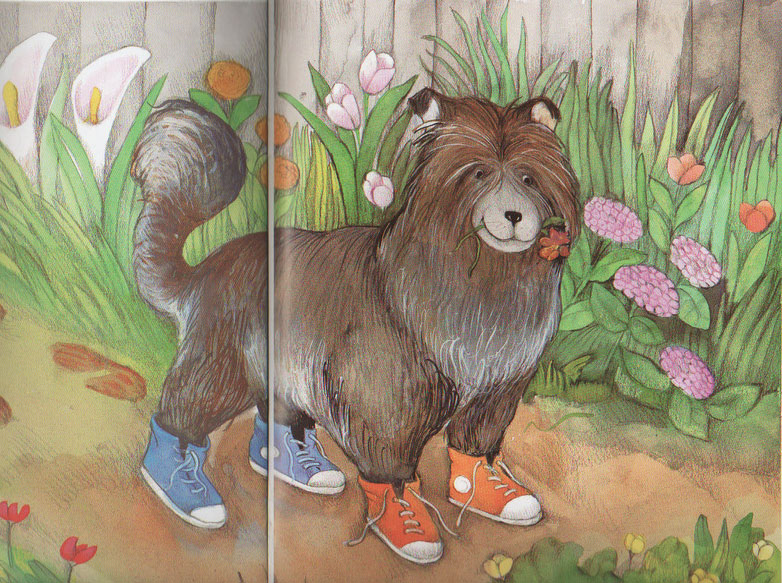
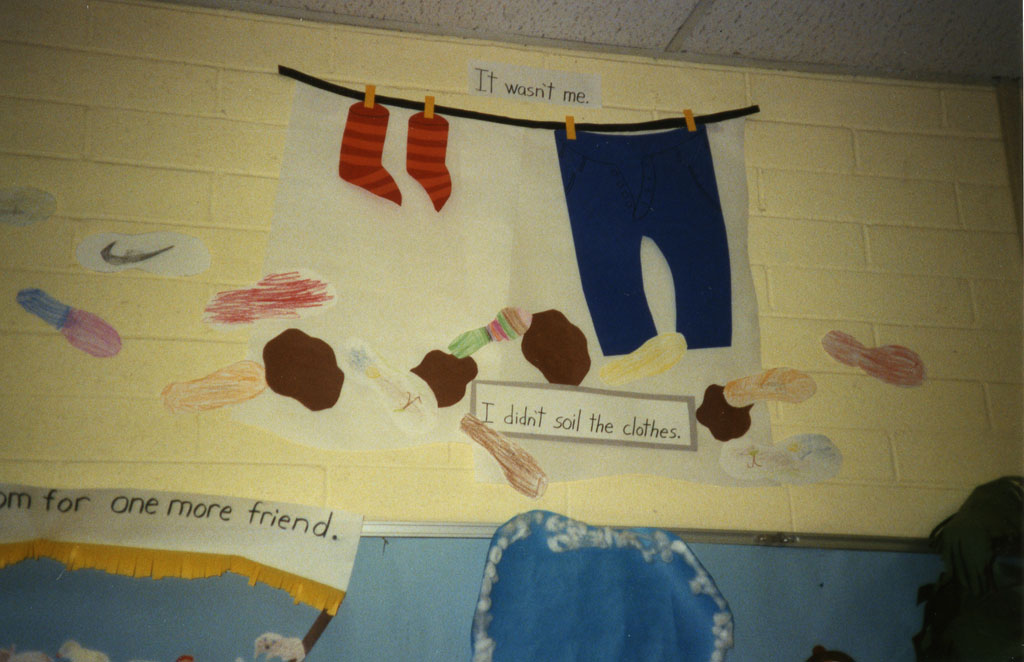
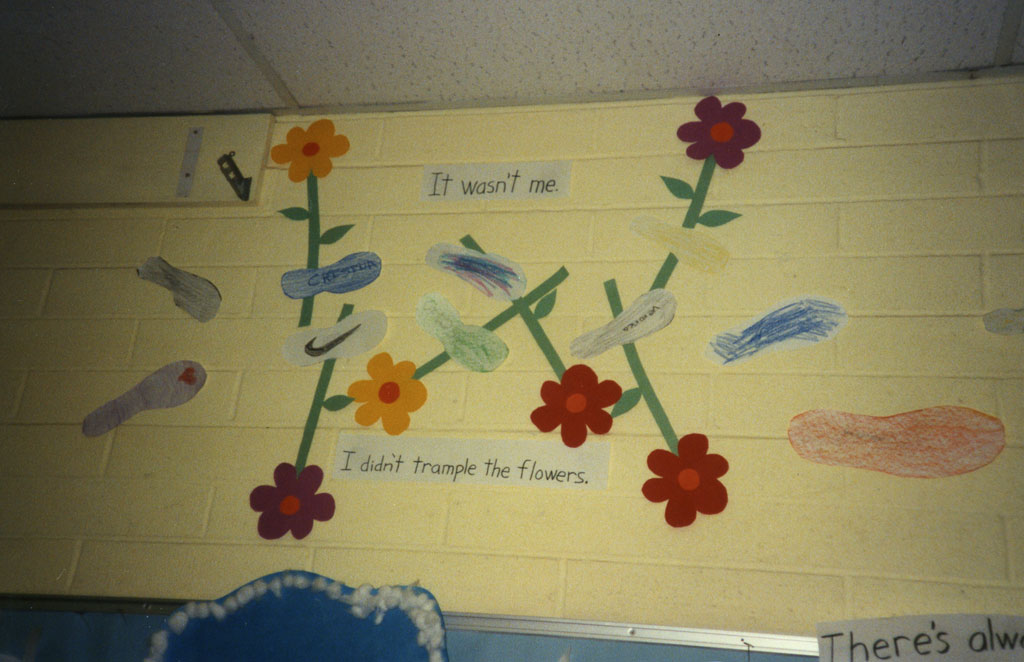
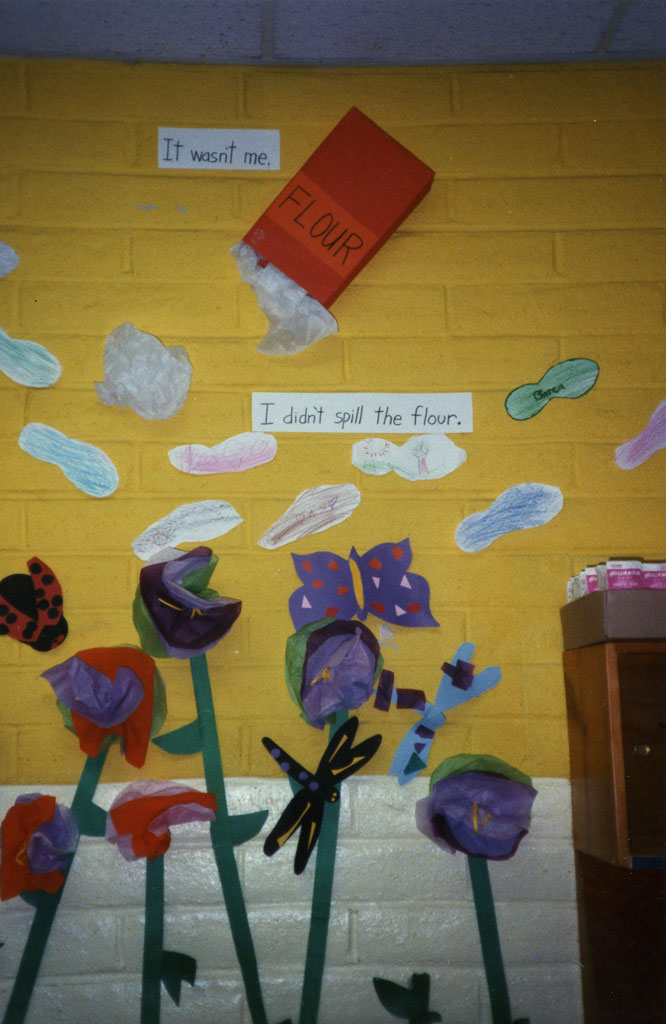
While my children were growing up we had a large dog. One day when I came home the living room was in true disarray. When I asked who had done all that all three boys responded:
“It Wasn’t Me.”
It took repeated questions to finally hear: “It was the dog.”
Since that did not seem the usual conduct of the dog, I insisted, “but, why did the dog do this?” To receive the answer: “Because it did not like wearing sneakers.”
And that day inspired this much beloved book, which keeps delighting so many children.
Image Gallery
READERS’ RESPONSES
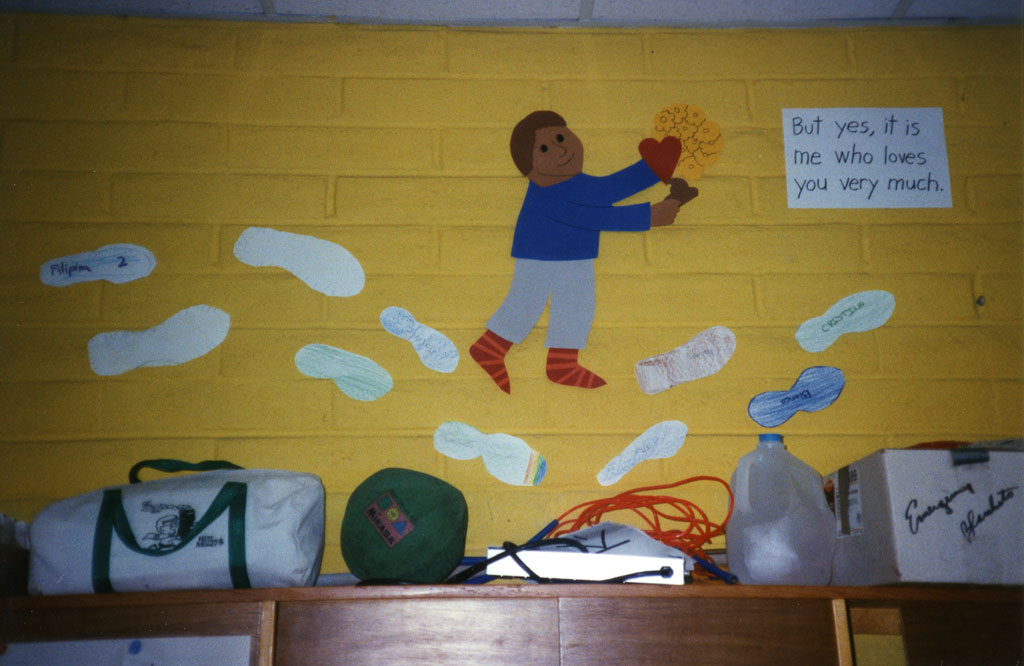
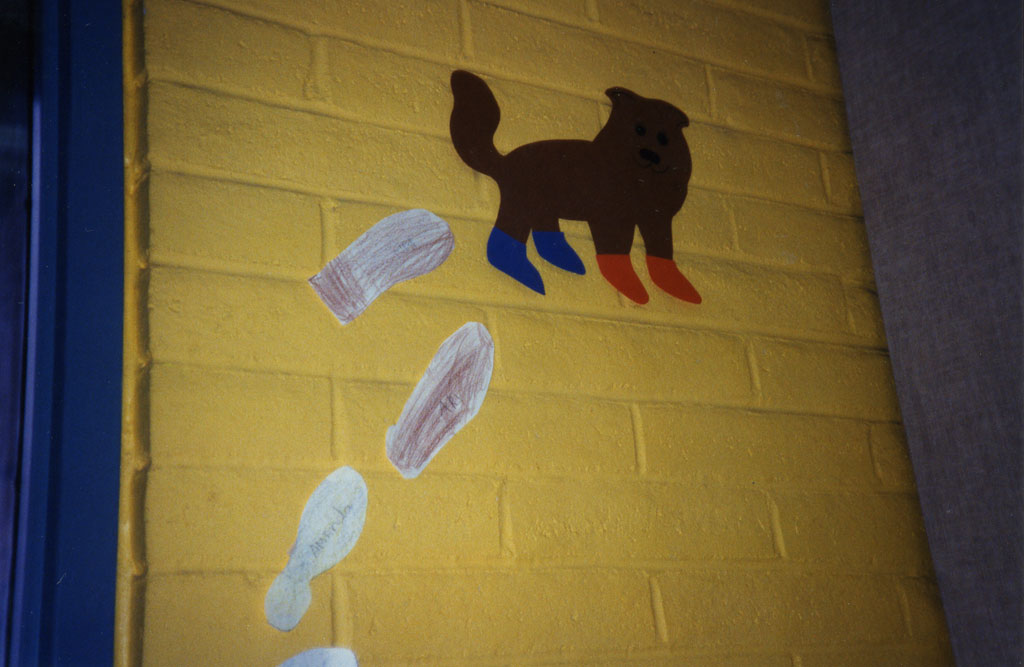
If you have enjoyed reading or sharing this book, I would very much like to hear from you. Please click here to send your comments.
In The Cow’s Backyard
Tuesday, December 15th, 2009BOOK DESCRIPTION
“There’s always room for one more” is the message of this delightful cumulative tale.
One by one, many animals come to the cow’s backyard. Each one is greeted by the ant, who is enjoying the shade laying on the hammock in the cow’s backyard. Each accepts the ant’s invitation to lay on the hammock. And all goes well until the arrival of mother elephant. What is the ant to do now? If the elephant climbs on the hammock, it will surely break…
This story proves that “When there is goodwill / there’s always a way / for one more friend / to join in and play!”
One of the beloved titles of the series Stories the Year ‘Round, or in Spanish, Cuentos para todo el año. The complete stories of the series are:
SPRING
A Rose with Wings
A Surprise for Mother Rabbit
The Empty Piñata
PRIMAVERA
Rosa alada
La sorpresa de Mamá Coneja
La piñata vacía
SUMMER
How the Rainbow Came to Be
After the Storm
In the Cow’s Backyard
VERANO
Cómo nació el arco iris
Después de la tormenta
La hamaca de la vaca
FALL
The Kite
What Are Ghosts Afraid Of?
“Turkey for Thanksgiving?” “No, Thanks!”
OTOÑO
El papalote
El susto de los fantasmas
–¿Pavo para la Cena de Gracias? –No, gracias.
WINTER
The Golden Cage
I Don’t Want to Melt
It Wasn’t Me
INVIERNO
La jaula dorada
¡No quiero derretirme!
No fui yo
CDS AND CASSETTES DESCRIPTION
There is a special value to listening to a books read by the author. Such recordings show just where the author wishes to convey feelings and emotions, emphasis and suspense. When the text is put to music it acquires additional interest for children.
I particularly like to read aloud and to record my readings so, for me, it was particularly joyful to record these twelve stories in English and Spanish.
The stories can be found in individual cassettes in English and Spanish, one for each book of the series, or in CDs in English and Spanish versions. Each of the CDs contains the twelve stories of the series.
A Special Bonus
Because these stories have been so beloved by children, I conceived the idea of given them an extra dimension. I have rewritten the 12 stories in Spanish in verse format. And Suni Paz, with her incomparable creativity, has put them to music. So the Spanish cassettes and CD contain not only the story as published in the book told by me, but also the story retold in verse form and sang by Suni.
AUTHOR’S NOTE
The twelve books of this series are some of my best well known books among bilingual teachers and their students. They are also very dear to my heart since the inspiration for most of them comes from my own children’s childhood.
The major source of inspiration for this book comes from my own extended family where there has always been room for one more.
We have enjoyed many festivities, birthdays, weddings, Thanksgiving weekend, Christmas, in which everyone has felt free not only to come but to bring along friends.
I dedicated the book to my cousins Virginia de Miranda and Peque Balbona because their home was always open to the large family for any occasion.
While this is the inspiration behind the essence of the book, at a more immediate level I love sleeping on hammocks. And, finally, as in many of my books and poems the birth of the book was determined by a phrase that appeared in my mind, “la hamaca de la vaca,” it sounded so wonderful I needed to find a story for it!
READERS’ RESPONSES
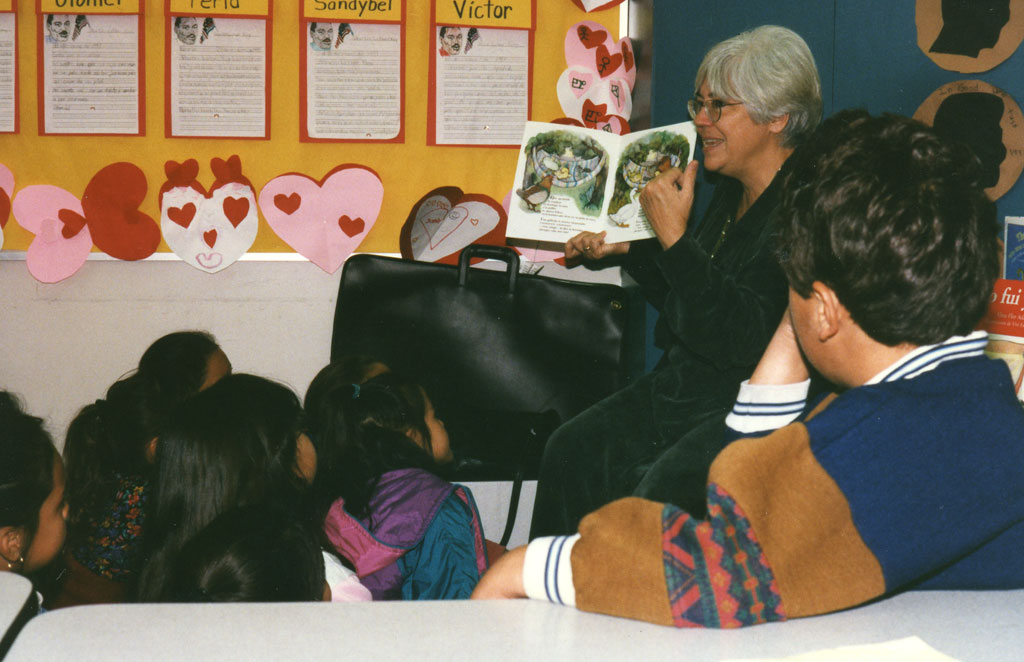
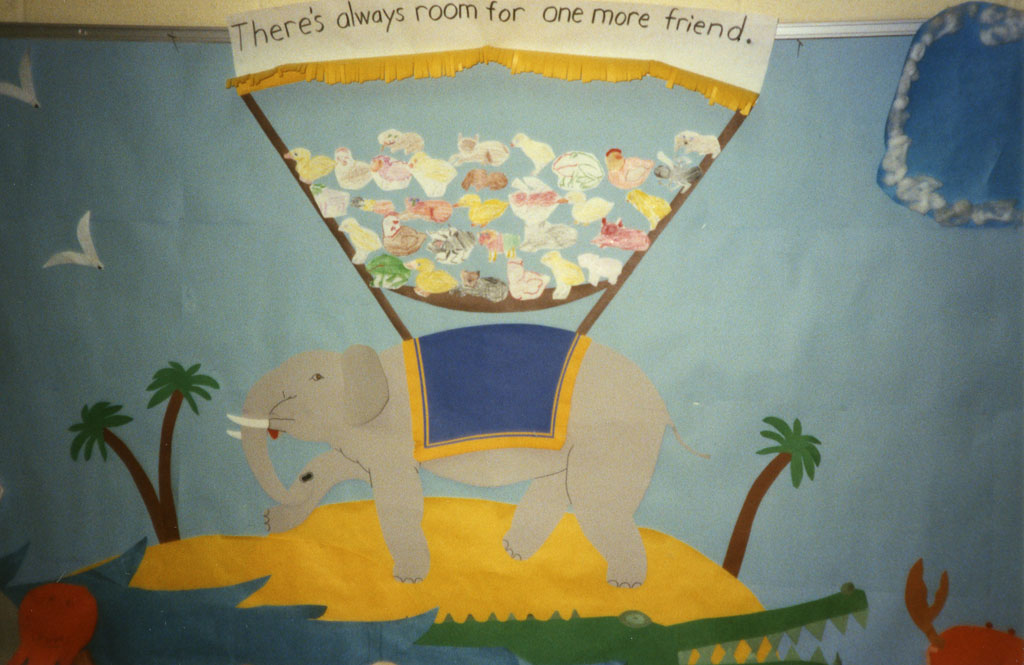
If you have enjoyed reading or sharing this book, I would very much like to hear from you. Please click here to send your comments.
I Love Saturdays y domingos
Monday, December 14th, 2009RECOGNITIONS
America’s Commended List
BOOK DESCRIPTION
Saturdays and Sundays are very special days for the child in this story. On Saturdays, she visits Grandma and Grandpa, who come from a European-American background, and on Sundays–los domingos–she visits Abuelito y Abuelita, who are Mexican-American. While the two sets of grandparents are different in many ways, they also have a great deal in common–in particular, their love for their granddaughter.
While we follow our narrator to the circus and the pier, share stories from her grandparents’ pasts, and celebrate her birthday, the depth and joy of both cultures are conveyed in Spanish and English. This affirmation of both heritages will speak to all children who want to know more about their own families and ethnic backgrounds.
VIDEO DESCRIPTION
Award-winning and multicultural children’s literature comes to life at Shelley’s “Beyond the Page Café,” a multimedia environment where enthusiastic youngsters follow their imagination and experience books from the inside out.
Today’s special at the café is I Love Saturdays y domingos. Animated illustrations bring to life the charming story of a special girl and her family. Her paternal grandparents are of European descent; her maternal abuelito y abuelita are Mexican-American. This lucky girl enjoys the love of both sets of grandparents, each of whom provides a deep connection to their rich cultural heritage.
After the story, Shelley and the kids sit in on an interview with renowned educator and author Alma Flor Ada. Then they are off to enjoy a video field trip featuring grandparents. [18 minutes]
AUTHOR’S NOTE
This book is very dear to me for the great reception it has received from readers. Many times during autographing sessions people tell me they want it for a special child with dual heritage, and it not only for those that share Hispanic heritage, but many others as well.
While many people think I must have been inspired by my own family–two of my sons are married to women of Anglo descent and the third to a Brazilian, the idea for the book came to me, a long time ago, before any of my children had married. While in Hawaii, a Sunday afternoon in Lahaina. I watched as many families strolled by. It was apparent that they had very mixed heritage–Chinese, Japanese, Filipino, Hawaiian, Puerto Rican, Anglo– and that they felt very comfortable with each other. That experience moved me to write this story. It took a long time for the book to be published and by then I did have grandchildren with dual heritage. Sometimes in my own experiences I wonder whether literature reflects life or life reflects literature.
Seeing this book transformed into a video has been wonderful. It made it even more interesting to be interviewed for the video in the company of my granddaughter Camille.
REVIEWS
Publishers Weekly
Through this affectionate and revealing portrait of a bilingual girl’s weekend visits to her two sets of grandparents, Ada (Where the Flame Trees Bloom) and Savadier (A Bedtime Story) prove that straddling two worlds can be a blessing rather than a hardship. The left of each spread depicts the narrator spending Saturdays with her paternal grandparents, with whom she speaks English; on the right, she passes los domingos (Sundays) with her Mexican-American Abuelito and Abuelita and converses in Spanish. The situations in the two households share enough similarities that readers can extrapolate the meaning of the Spanish words in context. For instance, on one spread, the colors of the balloons her paternal grandparents give her also appear in the kite that her Abuelito makes for her. Each pairing makes for a loving comparison and contrast, enlivened by Savadier’s graceful, warm-toned watercolor spot illustrations. At book’s end, both sets of grandparents coordinate a cooperative gift for the girl’s birthday. The balance tips slightly in Abuelito and Abuelita’s favor, in terms of fun and exoticism (e.g., Grandpa and Grandma watch a video about the circus while the Mexican-American grandparents “take me to a real circus”). Youngsters, however, will come away with the idea that this girl is very lucky to have four such interesting people who love her. Ages 4-8.
School Library Journal
K-Gr 2: A little girl recounts the joy of her weekends, Saturdays spent with her Euro-American Grandma and Grandpa and Sundays (los domingos) with Abuelito and Abuelita, her Mexican-American grandparents. She does different things in each place and goes on different outings: off to the circus, to the pier, out floating balloons or flying kites. She hears different stories that reflect her grandparents’ heritages. However, on her birthday, it is clear that both sets of relatives are united in their love of their granddaughter. Lively, childlike prose that integrates Spanish words flawlessly and understandably makes this a winner for storytimes. Savadier’s watercolor cartoon illustrations are bright, clear, and stylistically reminiscent of Lillian Hoban’s work. Paired with books like Carmen Santiago Nodar’s Abuelita’s Paradise (Albert Whitman, 1992), or even such old standbys as Helen Buckley’s Grandfather and I (Lothrop, 1994), this book will make a strong statement about cultural diversity and the universality of love. Ann Welton, Grant Elementary School, Tacoma, WA.
Booklist
Ages 4-8. A little girl visits her Grandpa and Grandma, her father’s parents, on Saturdays and her “abuelito y abuelita,” her mother’s parents, on “los domingos.” Dearly cherished by both sets of grandparents, the little girl delights in the unique differences of the two households and moves with ease between the two cultures. Although the little girl uses Spanish words and phrases in describing her Sundays with her Mexican American grandparents, for the most part the meanings are explained or can be inferred from the context. Showing the various weekend experiences, Savadier’s softly colored watercolor illustrations reflect the happy heart of the little girl. Together, Ada and Savadier have created a picture book that gracefully embraces and celebrates a young child’s involvement in her dual heritages. Especially recommended for libraries serving Latino and multicultural communities. –Annie Ayres
Americas Commended List
A young child is doubly blessed to have two sets of loving grandparents, each with distinctive cultural heritages: her grandparents are European-American, and her abuelos are Mexican-American. She happily shares in the varied cultural experiences when visiting on the weekend. Ada effectively juxtaposes the joys to be found by a child growing up within dual cultures. Savadier accompanies the text with graceful color illustrations that capture the pleasures of childhood.
BLOG REVIEWS
Sara Hale’s Blog
This book is an example of multicultural or international literature. It is about a little girl who spends the weekends visiting her grandparents. Her grandparent’s on her father’s side of the family speak English, and her grandparents on her mother’s side of the family speak Spanish. The book has alternating pages that go back and forth between her experiences with each set of grandparents. When describing her Hispanic grandparents, some of the words are written in Spanish. Even though they come from different backgrounds, both sets of grandparents are very similar and plan the same activities for their granddaughter, such as cooking breakfast, playing with pets, counting things, learning about the circus, looking at fish, etc. At the end, the girl’s whole family gets together to plan a special birthday surprise for the little girl. The Hispanic culture is represented by the words written in Spanish and by some of the activities described, such as playing with piñatas and singing “Las mañanitas,” a popular Spanish song, on her birthday.
This book would be great for any classroom to teach children about the Spanish culture and also to show children that people from different backgrounds are alike and enjoy similar activities! Children can also connect to the book if they have ever spent a weekend with their grandparents. The book is especially great for classes that have Spanish-speaking students. I read this book to a second grade class last semester, and the whole class loved it. The Spanish-speaking children seemed very excited to be hearing a book with some Spanish words! They even sang the song, “Las mañanitas” for me, because I did not know the tune. I think that 3rd-5th graders would love this book as well, especially readers who are a bit behind grade level or students who are still learning English. The pages basically say the same thing in English and then again in a combination of English and Spanish, so this could help them learn the language by seeing direct translations and connections!
Hilary Lemar’s Blog
Award winning author, Alma Flor Ada, who also wrote My Name is Maria Isabel, has done an amazing job celebrating differences in culture in I Love Saturdays y domingos. This story starts off with a little girl telling about her weekends with her grandparents. She spends Saturdays with her father’s parents and domingos with her mother’s parents. She tells about what each grandmother serves her for breakfast. Her father’s mom gives her milk, scrambled eggs, and pancakes, while her mother’s mom gives her huevos rancheros. The little girl expresses her love for the differences in her grandparents’ cultures and speaks proudly of each grandparent and where they came from. This story shows how important a person’s culture is to themselves, as well as to the rest of their family. When this little girl grows up she will tell of these many different cultures that are all an important part of who she is. I think that this story is important to have in the classroom and would be great to do as a read aloud. I think that students would benefit greatly to read or have this book read to them because it will teach them that there are many different cultures and that people should be proud of their culture and who they are. I really feel that Alma Flor Ada does a wonderful job sending a positive message to be proud of and to celebrate you culture. Children will benefit from hearing this message and hopefully they will remember it in the future.
Compare and Contrast Activities: Carmen’s Blog
Discussion: It is important for students to be able to compare and contrast different things. Through writing a compare/contrast paper students are able to see the similarities and differences between different things. Then it is possible for them to come to a conclusion about possibly making a decision. In the book I Love Saturdays y Domingos by Alma Flor Ada a bilingual girl compares the different activities and personal qualities that she enjoys with each of her two sets of grandparents. Though she does different activities with each set of grandparents, she loves them each the same.
How to Teach It: I am going to read a book titled I Love Saturdays y Domingos by Alma Flor Ada. It is about a bilingual girl who has two sets of grandparents that are very different, but she loves them each the same. Listen for the similarities and differences that her two sets of grandparents have. In the story she calls one set of grandparents “Grandma and Grandpa” and her other set of grandparents “Abuelita and Abuelito”. Abuelita is the Spanish word for grandma and Abuelito is the Spanish word for grandpa. I’m going to have a list of the similarities and another list of the differences between the girl’s grandparents. Can anyone name any similarities between the girl’s grandparents? Ex: Both grandfathers like to tell stories about when they were growing up. Both grandmothers like to tell stories about their families when they were young. (I would write the similarities as a list on the board) Can you name any differences? Ex: Her Grandma has a cat, and her Abuelita has a dog. She watches movies about the circus with her Grandma and Grandpa. She goes to the circus with her Abuelita and Abuelito. (I would write the differences as a separate list on the board) Now that we know what a story is like that compares and contrasts different things or people, I want you to try and write your own comparing and contrasting story. You can compare/contrast anything you want. You can compare and contrast the activities and personal traits of your own grandparents like the girl in the book did, or you can pick two totally different things or people to compare and contrast. You might even try comparing two different options for a decision you are trying to make. To start off you might want to make a list of the similarities and then a list of differences so you can have a starting point for your story.
Mrs. Lawrence’s Blog
In one of her most popular works, Ada tells of a young girl enjoying the similarities and the differences between her English-speaking and Spanish-speaking grandparents. On Saturdays she goes to visit her father’s parents, Grandma and Grandpa. On Sundays she spends the day with her mother’s parents, Abuelito y Abuelita. She eats different breakfasts with each grandparent. Grandma has a cat named Taffy. Abuelita has a dog named Canelo. The young girl spends her weekend doing various activities with both sets of grandparents. It’s time to celebrate her birthday. She gets a new doll from Grandma and Grandpa and a dress. Her Abuelito has made her a dollhouse and Abuelita has made her a dress. The dress is the same as her doll. The kids take turn breaking the piñata. Her family celebrates by singing Happy Birthday and Las Mananitas. This multicultural story is warm and soft just like Elivia Savadier’s watercolor illustrations. Other titles by Ada are Dear Peter Rabbit, With Love, Little Red Hen, Three Golden Oranges, Yours Truly Goldilocks, and The Golden Coin. She received the Pura Belpre medal for her book Under the Royal Palms: A Childhood in Cuba. I thought this book was an excellent choice to teaching multicultural education. It really does include the beauty of diversity and the warm feeling of togetherness. This book is definitely a thumbs up, especially in the diversity category. An excellent way to help others understand the uniqueness of multicultural families.
Mrs. Moore’s Blog
I Love Saturdays y domingos by Alma Flor Ada: Award winning Alma Flor Ada (With Love, Little Red Hen) demonstrates the differences between two cultures in this book and how no matter what the differences, love is universal. A young girl encounters different experiences with two sets of grandparents during her weekend visits with them. One set of grandparents is English speaking while the other set speaks Spanish. The girl takes pleasure in how her grandparents are different in many ways, yet they have many things in common. One grandfather tells the girl stories about coming from Europe while abuelito tells stories about Mexico. Another difference is that the English-speaking grandparents make the girl pancakes for breakfast while the Spanish-speaking grandparents make juevos rancheros. The illustrations portray the joy and the love that family members share with each other. Elivia Savadier’s bright watercolor illustrations wonderfully capture the main thing that both sets of grandparents share in common in this story, which is their love for their granddaughter. This is a fabulous book that can be used to demonstrate the variety of cultures.. It could also be used to show that although there may be differences between cultures, people can all come together in love. I truly enjoyed this book especially because I can relate to it. My children have one set of grandparents that are English speaking and a set who speak English and Spanish. The two sets of grandparents share several differences and similarities. But one thing that they definitely share in common is that both sets love my children. As my son says, “I love Nana, Tata, Gigi and Papa and they love me.”
Mrs Moore: Target Audience: 2nd Grade
Discussion: This book is a great book to use to demonstrate the differences between cultures and heritages. It can be used to teach about the many ways birthdays can be celebrated among different cultures. In a class with much diversity, children will get to know more about their classmates. Children will get a better understanding about other cultures and gain knowledge of the difference in celebrations among various people. How to Teach It: Today I will be reading the book I love Saturday y domingos. Okay class, now that we have read this book, what were some of the differences between the two cultures in the book? In what ways were both sets of grandparents different? Did they share anything in common? What did you think about how they celebrated the girl’s birthday? How does your family celebrate birthdays? Do you know of birthday traditions from other cultures? Now we will be writing about your own family birthday traditions and compare it to a birthday tradition of another culture. (Allow students some time to research other cultures in the school library as well as in the computer lab.) Now that we have written our papers, who would like to share what they have written first?
The Hear My Cry Award is named for all ethnically and racially diverse authors. We need to bring more diverse authors into our classrooms and that is the basis of this award. This children’s literature award goes to a book that lets us see into the culture of another race or ethnicity.
This award is about the invisible social issues of not having diversity of literacy in the classroom. Throughout the article “Reading the World of School Literacy”, Willis addresses the issue of how teachers feel they have great literacy programs that they are using in their classroom, but most do not have any diversity to ethnicity or race even when those races are present in the classroom. Theoretically, each literacy program purports to be culturally neutral and not mediated by any dominant view of language, when, in fact, a Eurocentric, mainstream cultural view dominates.
The book that wins this award will show us about the culture of those that are ethnically and racially diverse and the author must be ethnically or racially diverse. For this award we are looking at all genres and all grade levels. Nominations are due on March 5, 2009.
Work Cited: Willis, Arlette. Reading the World of School Literacy: Contextualizing the Experience of a Young African American Male. Harvard Educational Review, Vol. 65 No. 1, 1995.
Nominated “I Love Saturdays y Domingos” by Alma Flor Ada.
This book is about a bilingual girl’s weekend visits to her two sets of grandparents. It sends the message that flopping between two worlds can be a blessing rather than a hardship. The left of each spread shows the main character spending Saturdays with her paternal grandparents, with whom she speaks English; on the right, she spends los domingos (Sundays) with her Mexican American Abuelito and Abuelita and converses in Spanish. The situations in the two households share similarities which make it easy for readers to understand many of the words in spanish. This book deserves to win the Hear My Cry Award because the author, Alma Flor Ada uses both english and spanish to show kids the beauty of having different cultures in their family.
Lesson Plan
http://www.ket.org/education/guides/BTP_ILoveSaturdays.pdf
READERS’ RESPONSES
If you have enjoyed reading or sharing this book, I would very much like to hear from you. Please click here to send your comments.
I Don’t Want To Melt
Monday, December 14th, 2009BOOK DESCRIPTION
Sometimes fate seems inevitable, as in the case of the snowman who must melt when Spring arrives. But his friends, the birds, the squirrels, and the mice family, all come up with a special plan to help the snowman. A delightful and moving tale in its own right, the story is also a vivid portrayal of the water cycle and the cycle of the seasons.
One of the beloved titles of the series Stories the Year ‘Round, or in Spanish, Cuentos para todo el año. The complete stories of the series are:
SPRING
A Rose with Wings
A Surprise for Mother Rabbit
The Empty Piñata
PRIMAVERA
Rosa alada
La sorpresa de Mamá Coneja
La piñata vacía
SUMMER
How the Rainbow Came to Be
After the Storm
In the Cow’s Backyard
VERANO
Cómo nació el arco iris
Después de la tormenta
La hamaca de la vaca
FALL
The Kite
What Are Ghosts Afraid Of?
“Turkey for Thanksgiving?” “No, Thanks!”
OTOÑO
El papalote
El susto de los fantasmas
–¿Pavo para la Cena de Gracias? –No, gracias.
WINTER
The Golden Cage
I Don’t Want to Melt
It Wasn’t Me
INVIERNO
La jaula dorada
¡No quiero derretirme!
No fui yo
CDS AND CASSETTES DESCRIPTION
Facilitating that children listen to the stories as recorded by the author has a special value. They can hear in the author’s voice just exactly how exactly the author wished to convey the stories feelings and emotions, emphasis and suspense. I particularly like to read aloud and to record my readings so, for me, it was particularly joyful to record these twelve stories in English and Spanish.
The stories can be found in individual cassettes in English and Spanish, one for each book of the series, or in CDs in English and Spanish versions. Each of the CDs contains the twelve stories of the series.
A Special Bonus
Because these stories have been so beloved by children, I conceived the idea of given them an extra dimension. I have rewritten the 12 stories in Spanish in verse format. And Suni Paz, with her incomparable creativity, has put them to music. So the Spanish cassettes and CD contain not only the story as published in the book told by me, but also the story retold in verse form and sang by Suni.
AUTHOR’S NOTE
The twelve books of this series are some of my best well known books among bilingual teachers and their students. They are also very dear to my heart since the inspiration for most of them comes from my own children’s childhood.
The major source of inspiration for this book comes from my children, which are depicted as the four children in the story. One winter, while we were living in Detroit, they made a snowman. We were about to leave for Florida, to spend Christmas with my mother, when I saw my youngest son, Gabriel, approached the snowman and whisper: “Please, do not melt.” It was for me a very tender moment.
Remembering that delightful instant years later inspired me to write I don’t want to melt.
Many of the details, in the story, like using small coconuts gathered in Miami for the snowman’s buttons are true.
This story has been a favorite of many teachers who welcome being able to explain the cycle of water through a meaningful story. It has also been appreciated by children who have to undergo moving or other sorts of major change in their lives.
READERS’ RESPONSES
If you have enjoyed reading or sharing this book, I would very much like to hear from you. Please click here to send your comments.
Huertos de coral
Monday, December 14th, 2009BOOK DESCRIPTION
This rich anthology offers 128 pages of poetry for the upper elementary and middle school students. The works of some of the most prestigious poets in the Spanish speaking world are represented.
Some of the poets included among many others are:
- from Spain, Rafael Alberti, Federico García Lorca, Juan Ramón Jiménez, Antonio Machado
- from Argentina, Elsa Isabel Bornemann, María Elena Walsh
- from Costa Rica, Floria Jiménez
- from Chile, Gabriela Mistral
- from Cuba, Mirta Aguirre, David Chericián, José Martí
- from México, Elías Nandino, Antonio Ramírez Granados, Octavio Paz, Gilda Rincón
- from Nicaragua, Rubén Darío
- from Puerto Rico, Ester Feliciano Mendoza
Poems by Alma Flor Ada published originally in this anthology include: Chirrido de la cigarra and the retelling in verse of the traditional tales of Cenicienta and Las semillas mágicas. These poetic versions of beloved tales have been put to music and recorded by Suni Paz. Cenicienta in the CD Tres princesas and Las semillas mágicas in the CD Cuéntame un cuento.
AUTHOR’S NOTE
Poetry is one of the best gifts we can give children. A poem a day enhances a child’s life with the sounds of words, with rhyme and rhythm, with the enchantment of images and metaphors, with the invitation to see reality with new eyes.
Our culture is very rich in outstanding poets and excellent poetry. Some poets write primarily for children, but even our most recognized poets have at some time or other written poetry that children can enjoy.
The Cielo abierto Poetry Collection is composed of seven poetry anthologies. These rich anthologies include selections from the folklore along with the work of the best Spanish-speaking poets from the United States, Latin America and Spain. Each of the selections has been carefully chosen to awaken children’s love of poetry and to deepen their appreciation for the musicality and richness of the Spanish language. Original poems by Alma Flor Ada and Isabel.
It is impossible to assign a specific age to poetry, since the same poem can be enjoyed by children of different ages at different moments. Yet, there is a certain progression of language and reading difficulty in the series reflected in the order in which the titles are listed.
Grade levels have been mentioned next to the titles as an orientation, but should not be seen restrictively.
The titles are:
- Gorrión, gorrión [PreK-2] 64 pages
- El verde limón [K-3] 48 pages
- Dulce es la sal [K-3] 48 pages
- La rama azul [2-5] 64 pages
- Nuevo día [2-5] 64 pages
- Huertos de coral [5-8] 128 pages
- Ríos de lava [5-12] 128 pages
READERS’ RESPONSES
If you have enjoyed reading or sharing this book, I would very much like to hear from you. Please click here to send your comments.
How the Rainbow Came to Be
Monday, December 14th, 2009BOOK DESCRIPTION
The author magically combines scientific facts with a fable about cooperation in this enchanting tale.
In the beginning, Earth has no color until Red, Blue, and Yellow decide that a gray planet is unsightly. Eventually they each realize the importance of mixing their separate hues in order to create a colorful planet. Excellent for discussing cooperation, solidarity, and the value of diversity, this book is also a great springboard for exploring primary and secondary colors.
One of the beloved titles of the series Stories the Year ‘Round, or in Spanish, Cuentos para todo el año. The complete stories of the series are:
SPRING
A Rose with Wings
A Surprise for Mother Rabbit
The Empty Piñata
PRIMAVERA
Rosa alada
La sorpresa de Mamá Coneja
La piñata vacía
SUMMER
How the Rainbow Came to Be
After the Storm
In the Cow’s Backyard
VERANO
Cómo nació el arco iris
Después de la tormenta
La hamaca de la vaca
FALL
The Kite
What Are Ghosts Afraid Of?
“Turkey for Thanksgiving?” “No, Thanks!”
OTOÑO
El papalote
El susto de los fantasmas
–¿Pavo para la Cena de Gracias? –No, gracias.
WINTER
The Golden Cage
I Don’t Want to Melt
It Wasn’t Me
INVIERNO
La jaula dorada
¡No quiero derretirme!
No fui yo
CDS AND CASSETTES DESCRIPTION
There is a special value to listening to a books read by the author. Such recordings show just where the author wishes to convey feelings and emotions, emphasis and suspense. When the text is put to music it acquires additional interest for children.
I particularly like to read aloud and to record my readings so, for me, it was particularly joyful to record these twelve stories in English and Spanish.
The stories can be found in individual cassettes in English and Spanish, one for each book of the series, or in CDs in English and Spanish versions. Each of the CDs contains the twelve stories of the series.
A Special Bonus
Because these stories have been so beloved by children, I conceived the idea of given them an extra dimension. I have rewritten the 12 stories in Spanish in verse format. And Suni Paz, with her incomparable creativity, has put them to music. So the Spanish cassettes and CD contain not only the story as published in the book told by me, but also the story retold in verse form and sung by Suni.
AUTHOR’S NOTE
The twelve books of this series are some of my best well known books among bilingual teachers and their students. They are also very dear to my heart since I have had such extraordinary responses to them.
Once, while visiting a school in the Bronx, I was telling the students the stories behind my stories. One student asked me how this book had come about. I answered that I honestly did not think there was a story behind the creation of this book, that I really did not know what had inspired it.
Then another child raised his hand and gave me, in all innocence, the greatest accolade. He said with conviction: “But, I do know where this story came from.” And when I asked him to explain, he said: “Those three colors are you, your friend Suni Paz, and Viví Escrivá. The three of you are making the world more beautiful for children, with your stories, your songs and your illustrations.” It was a moment I will never forget!
Reviews
School Library Journal
PreS-Gr 4– Appearing at a time when the whole world was just black, white, and different shades of gray, three colors–red, blue, and yellow–decide to make a contribution to the planet. The blue begins first and paints the rivers, the sky, and some birds. Red follows by painting strawberries and apples and another kind of bird. Yellow, believing the other two colors are lost without him, gives color to the sun and the sunflowers. Then they combine to create more colors. The story is simply told and illustrated with brilliant watercolors. The text is short and printed in bold type.
READERS’ RESPONSES


If you have enjoyed reading or sharing this book, I would very much like to hear from you. Please click here to send your comments.
How Happy I Would Be
Monday, December 14th, 2009BOOK DESCRIPTION
Surprise-filled illustrations awaken children’s imagination and inspire their creativity as they encounter these unexpected rhyming scenes. Viví Escrivá’s illustrations are superb.
CD AND CASSETTE DESCRIPTION
Facilitating that children listen to recorded books as recorded by the author has a special value. When they hear it in the author’s voice they can know just how the author wished to convey feelings and emotions, emphasis and suspense. When the text is put to music it acquires additional interest.
The special nature of each of the five books in the series Stories for the Telling or Libros para contar led to very different and exciting recordings. Suni Paz has created original music for the Spanish version of this cumulative book of rhyming words. Her whimsical rendition will charm all listeners. The English version has been professionally read to achieve the same level of engagement.
These extraordinary recordings have been produced in individual cassettes in English and Spanish. There is also a CD with English and Spanish versions. Each of the CDs contains the five books of the series.
CD (Stories For The Telling) includes Friends, How Happy I Would Be, The Song of the Teeny-Tiny Mosquito, Strange Visitors, Who’s Hatching Here?
AUTHOR’S NOTE
To play with rhyme and to imagine unique situations give me joy, a joy I suspect many children share. Teachers have told me many times how much their students enjoy this book and how it motivates them to make their own books following the pattern. And in the bookshelf I have dedicated to collecting the books made by children and given to me as gifts, there are quite a few inspired by this book.
REVIEWS
School Library Journal
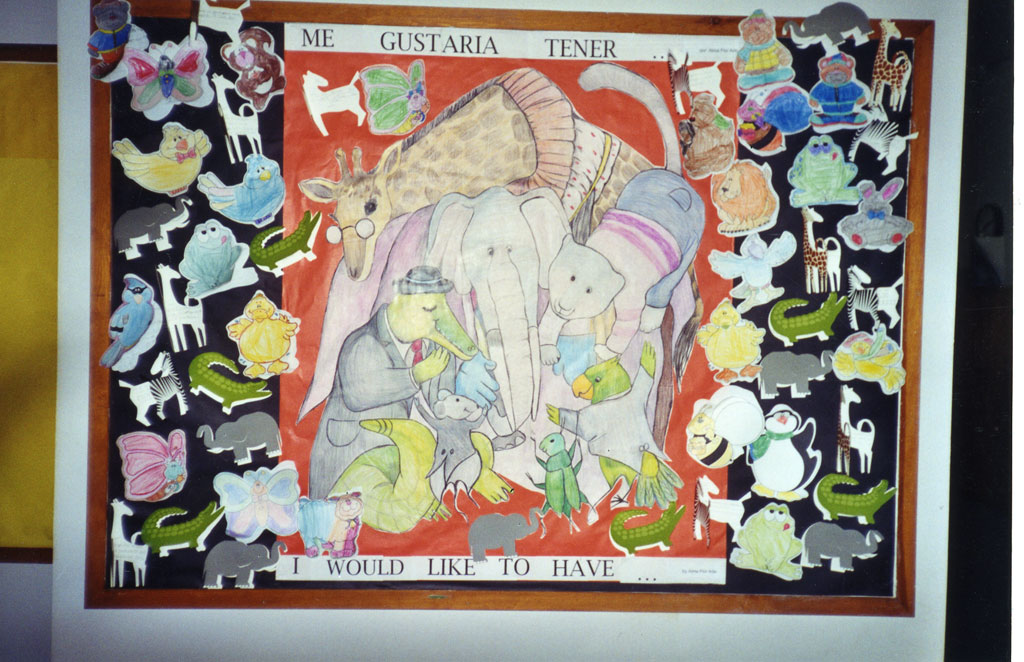
About Stories for the Telling: A charming series, illustrated with watercolor and pen-and-ink drawings. The stories are told in a humorous style and are enhanced throughout by Ada’s gift for language and poetry. El Canto del mosquito / The Song of the Teeny Tiny Mosquito is the droll story of a frog who eats a mosquito and whose song then sounds like that of a mosquito. The frog is eaten by a fish, who then sings like a mosquito, etc. Una extraña vista / Strange Visitors is a humorous counting story of the days of the week in rhyme. Me gustaría tener… / How Happy I Would Be… lists the various things “I would like to have…” Again in a counting-book format, the desired items all turn out to be animals involved in unusual activities (e.g. two giraffes reading with glasses). ¿Quién nacerá aquí? / Who’s hatching Here?, in contrast to the others, is a science book. Rhyming riddles ask which animal will hatch from different eggs. The eggs are presented in their natural habitats; both illustrations and text hint at the answers.
READERS’ RESPONSES
If you have enjoyed reading or sharing this book, I would very much like to hear from you. Please click here to send your comments.
